From the October 7th Battlefield to Israel’s Future: Koby Levy’s Journey to BGU
From the October 7th Battlefield to Israel’s Future: Koby Levy’s Journey to BGU
April 28, 2026
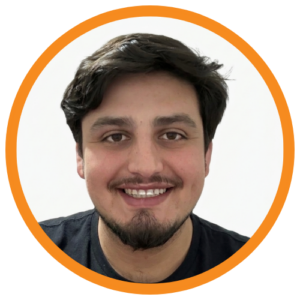
Koby Levy
On the morning of October 7th, 2023, Koby Levy woke up at an Israeli army base along the Gaza border expecting another routine day of service.
Within minutes, everything changed.
Levy—then a soldier in the IDF’s 7th Armored Brigade and today a first-year student at Ben-Gurion University of the Negev (BGU)—was stationed at a post between Kibbutz Nahal Oz and Kibbutz Kfar Aza. When the Hamas attack began, the base quickly became one of the first targets. After 20 minutes, Levy and his fellow soldiers were fighting for their lives as dozens—and eventually hundreds—of terrorists infiltrated the area. Levy and a group of soldiers took shelter in a fortified bomb shelter on the base, followed by hours of close-quarters combat.
“For hours straight we were face-to-face with Hamas fighters, from distances of 10 or 12 feet,” he recalls.
The battle lasted from early morning until late morning inside the shelter. Then a grenade exploded inside, injuring several soldiers and forcing those who survived to flee.
When Levy emerged outside, he saw one of his platoon’s tanks engulfed in flames. Nearby lay the body of his close friend and fellow commander, Yoni Golan. Levy tried to reach him, only to realize it was too late.
Running out of ammunition and with his weapon malfunctioning, Levy hid in dense bushes along the edge of the base. Alone, he remained there for nearly five hours as the battle continued around him.
Fifty-four Israeli soldiers were killed at his base that day, and 10 others were taken hostage. The survivors at the base were eventually rescued by a platoon of paratroopers and the Yamam unit—a special police force led by Arnon Zmora, who was later killed in June 2024 during the operation to rescue a group of hostages that included another BGU student, Noa Argamani.
For Levy, surviving the attack left him with a profound sense of responsibility to live fully.
“The biggest thing I take from that day is the understanding of how much life means,” he says, “and how lucky I was to wake up the morning of October 8th, go to the hospital, and check on myself. How lucky I was to be able to get released from the military, heal, go to therapy, start working, and decide where to travel. What a huge privilege all this is, because of how close I was to being like the many friends I had who lost their lives that day.”
That responsibility is visible in a poster created by Levy and his fellow soldiers, featuring the faces of their platoon members who were killed that day. He feels compelled to share their
stories in other ways, including the dozens of presentations he has given in Israel and worldwide about October 7th and the soldiers who fought beside him.
“I feel like one of my biggest obligations as someone who was there is to keep the memory alive,” he says.
After leaving the army, Levy spent nearly two years focusing on healing—working, traveling, and volunteering with youth programs. Eventually, he decided it was time to begin the next chapter of his life. That decision brought him to BGU.
It was a natural choice. Long before his military service, Levy developed a connection to the region through a mechina—a pre-army leadership program he attended in the Negev.
“I fell in love with the South,” he says. “BGU was the clearest option for me. It’s in the desert that I love. It was both the perfect getaway from the center of Israel, and a great school where I can learn exactly the things that interest and intrigue me.”
Now, Levy is a first-year student studying political science alongside Middle Eastern and European studies, aspiring to have a career in foreign affairs or diplomacy.
His own background provides him with a unique perspective. Although Levy was born and raised in Israel, much of his extended family lives in Minnesota. Growing up, he spent many summers there, experiencing life within the American Jewish community.
“I’m completely Israeli,” he says. “But growing up I spent summers in Minnesota with my family. It gave me a bit of both worlds.”
Those experiences helped shape his understanding of Jewish identity and the connection between Israel and Jewish communities abroad—connections he continues to explore at BGU. One of the aspects of campus life that surprised him most was discovering the wide range of student organizations and social initiatives.
“I was impressed by how socially active the campus is,” he says. “There are always people trying to convince you to take part in something good for society.”
Levy quickly became involved in several groups, including Hillel and other student initiatives focused on social responsibility, Jewish identity, and public engagement.
At the same time, what resonates deeply with him is BGU’s role in shaping Israel’s future, inspired by the vision of David Ben-Gurion that the future of Israel would be built in the Negev.
“The Negev makes up about 60 percent of the land of Israel, but only around 10 percent of Israelis live there,” Levy notes. “If we can’t make good use of this beautiful land in the Negev, we won’t have room for our future. Ben-Gurion said the desert is where the people of Israel will be tested, to see if we can use this massive majority of our land and make the best out of it.”
He also understands that institutions like BGU and its teaching hospital, Soroka University Medical Center, are anchors for innovation, research, and community growth.
After everything he has experienced, Levy believes that building a stronger future for Israel—especially in the South—is one of the most meaningful ways to honor the platoon members whose faces appear on that poster.
And each day he walks across the BGU campus, their memory walks with him.
Stories Like This